Zambia holds some of Africa’s largest copper reserves. But the right grinding equipment decides how much of that ore becomes profit. This guide breaks down real costs, key specs, and how to choose a mill that fits your operation.
Copper ore grinding is the process of reducing crushed ore particles to a fine size. This step unlocks copper minerals from surrounding rock. Without proper grinding, flotation and leaching recover far less copper.
In Zambia, most copper deposits are sulfide or oxide ores. Sulfide ores need fine grinding — usually down to 75–150 microns — before flotation works well. Oxide ores also need careful size reduction before heap leaching or tank leaching.
The grinding stage is often the most energy-intensive step in a processing plant. It can consume 30–50% of total plant power. So choosing the right mill is not just about purchase price. It affects your electricity bill every single day.
Ball mills and SAG (semi-autogenous grinding) mills are the two main types used in copper processing. Rod mills are sometimes used as a primary stage before ball milling. Each type has its own cost profile and performance range.
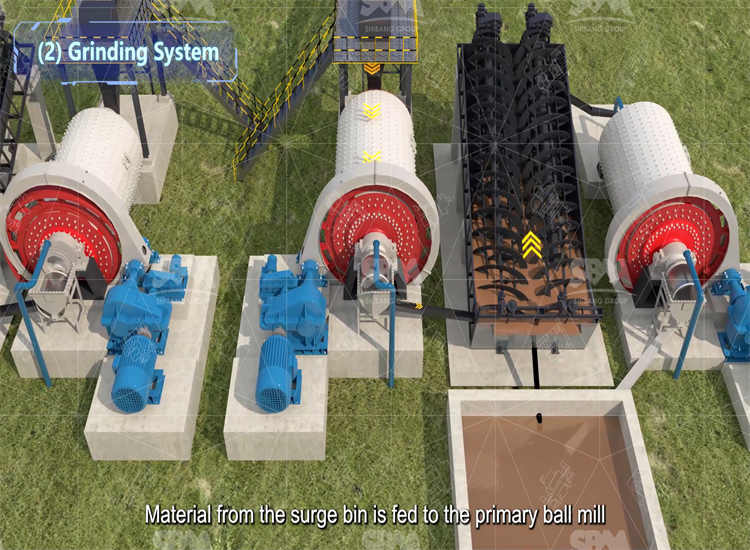
A ball mill is a rotating cylinder filled with steel balls. As it turns, the balls tumble and crush ore particles by impact and attrition. The ore enters one end and exits as a fine slurry from the other.
SAG mills work on a similar principle. But they use the ore itself — plus a small charge of steel balls — as the grinding media. This means lower media cost per tonne. SAG mills handle larger feed sizes, typically up to 250 mm.
Rod mills use long steel rods instead of balls. They produce a more uniform product and are good for coarser grinding targets (around 300–1000 microns). They are often placed before a ball mill in a two-stage circuit.
Before you compare prices, you need to understand what the specs actually mean. Here are the most important parameters for copper grinding mills.
| Parameter | Ball Mill | SAG Mill | Rod Mill |
|---|---|---|---|
| Feed size (F80) | 10–25 mm | 50–250 mm | 20–50 mm |
| Product size (P80) | 75–300 µm | 300–3000 µm | 300–1000 µm |
| Typical power range | 200–5,000 kW | 1,000–15,000 kW | 100–1,500 kW |
| Ball/rod charge | 30–45% | 6–15% (balls) | 35–45% |
| Operating speed (% critical) | 65–78% | 70–80% | 60–70% |
| Specific energy (kWh/t) | 8–20 | 5–15 | 6–12 |
| Best use case | Fine grinding, flotation feed | Primary grinding, large tonnage | Coarse grinding, uniform product |
Choosing the wrong mill costs money every day. The table below helps you match mill type to your actual operating conditions in Zambia.
| Condition | Recommended Mill | Reason |
|---|---|---|
| Feed from jaw/cone crusher (≤25 mm), flotation target P80 75–150 µm | Ball Mill | Precise control over final grind size; proven in Zambian sulfide circuits |
| ROM or coarsely crushed feed (50–250 mm), high tonnage (>300 tph) | SAG Mill | Handles coarse feed directly; reduces crushing stages; lower media cost |
| Need uniform coarse product before ball mill (P80 ~500 µm) | Rod Mill | Avoids overgrinding; lower fines generation; smooth feed to downstream ball mill |
| Small to mid-scale mine (20–100 tph), oxide or mixed ore | Ball Mill (overflow type) | Lower capital cost; easy to operate and maintain in remote areas |
| High ore hardness (BWi > 14 kWh/t) | SAG + Ball Mill circuit | SAG handles coarse reduction; ball mill achieves final target size efficiently |
| Power supply unreliable or limited to <1,000 kW grid connection | Ball Mill (smaller model) | Lower peak demand; more flexible power management |
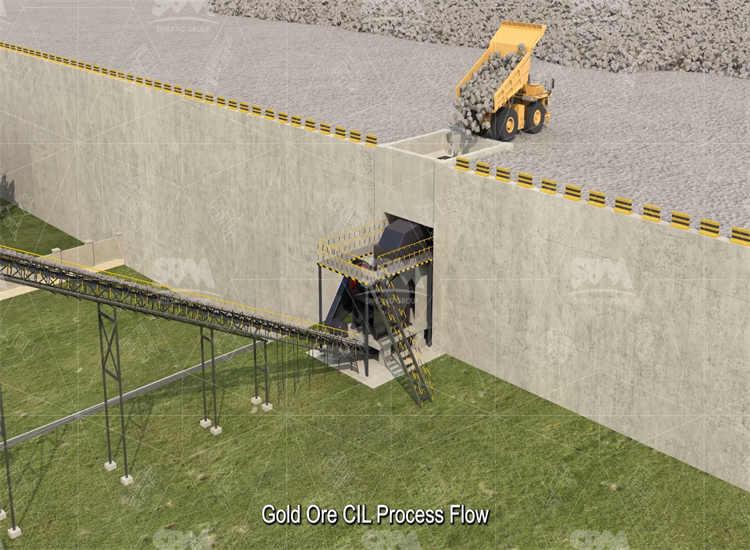
Electricity in Zambia is a real challenge. Load-shedding hits many mining regions, and grid power can be costly or unreliable. This forces operators to think carefully about energy efficiency.
The most direct way to cut power cost is to optimize your feed size. Each 1 mm reduction in F80 before the mill saves energy inside the mill. A well-set cone crusher or HPGR (high-pressure grinding roll) upstream can reduce mill power draw by 15–25%.
Also, check your ball charge and liner condition regularly. Worn liners reduce the lifting action inside the mill. This forces the mill to run longer for the same result — wasting power. Replacing liners on schedule keeps specific energy low.
Modern variable-speed drives (VSD) on mill motors also help. They let operators adjust mill speed to match ore hardness changes. This alone can cut energy use by 5–10% compared to fixed-speed drives.
This is a very common problem in Zambia. Open-pit mines often move through zones of oxide ore, then sulfide ore, then mixed ore. Each type has different hardness and grindability.
When ore hardness suddenly rises, the mill product becomes coarser than target. This means flotation recovery drops. You may not notice it right away — but assay results will show lower copper concentrate grades after a few shifts.
The solution is to build ore variability into your equipment selection from the start. Ask for a mill sized for the hardest ore you expect, not just the average. Also, consider a two-stage circuit. A SAG mill handles coarse, variable feed. A ball mill then brings the product to final size.
SBM can model your ore variability data during the design stage. We size the mill for your worst-case scenario so the circuit never becomes the bottleneck.
Many copper mines in Zambia are in remote areas — far from Lusaka, far from ports. This makes spare parts logistics a real risk. If a liner set or trunnion bearing takes six weeks to arrive, that is six weeks of lost production.
The answer is a two-part approach. First, choose equipment where wear parts are standardized and available in Southern Africa. Second, work with a supplier that holds buffer stock in a regional warehouse.
SBM maintains a parts support network and can pre-position critical wear items — liners, seals, bearing housings — at the site or at a regional depot. We also provide a recommended spare parts list (RSP) with every mill order, based on your actual throughput and ore abrasiveness.
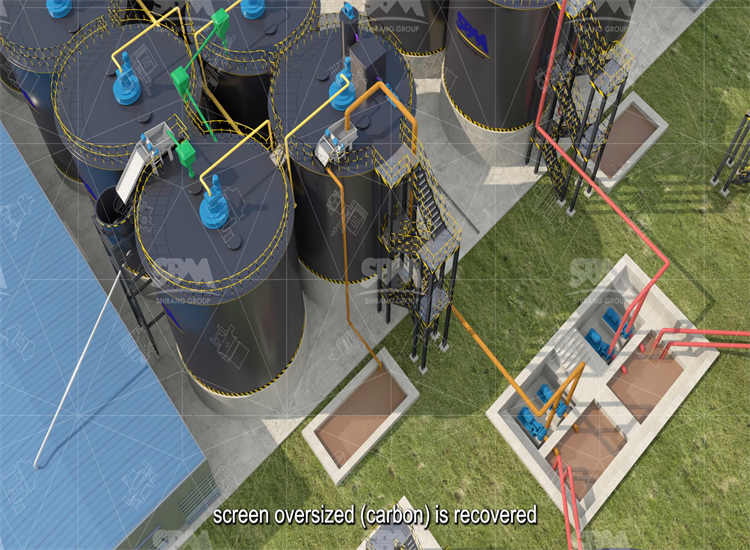
Site conditions: A 150 tph sulfide copper concentrator operating in Central Province, Zambia. Altitude approximately 1,200 m. Ambient temperature 18–34°C. Dry season dust levels high. Ore BWi measured at 12.4 kWh/t. Target P80: 106 microns for flotation.
Equipment installed: SBM MQY-3660 overflow ball mill (3.6 m × 6.0 m), 1,250 kW motor, VSD-equipped. Paired with a hydrocyclone cluster for closed-circuit classification.
Operating data after 12 months:
The plant metallurgist noted that the mill maintained consistent product size even during a 3-week period when ore hardness spiked to BWi 15.1. The VSD allowed operators to reduce mill speed slightly, which kept the product size on target without overloading the motor.
Site conditions: 40 tph oxide copper operation feeding a heap leach pad. Located in the Copperbelt, approximately 60 km from the nearest town. Grid power limited to 630 kW peak. Ore BWi: 9.2 kWh/t. Target P80: 3,000 µm (coarse crush for leach pad permeability).
Equipment installed: SBM MQG-2145 rod mill (2.1 m × 4.5 m), 400 kW fixed-speed drive. Simple open-circuit configuration.
Operating data after 8 months:
The operation manager highlighted that the rod mill’s simple design was critical for their small maintenance team. No complex hydraulics, no complex control systems — just mechanical reliability.
Equipment cost is only one part of the total picture. For a complete copper grinding circuit in Zambia, you need to consider several cost layers.
| Cost Category | Description | Typical Share of Total Project Cost |
|---|---|---|
| Equipment purchase (mill + motor + drive) | Main capital item; varies by mill size and specification | 35–50% |
| Civil and structural works | Foundation, mill building, access roads to equipment | 15–25% |
| Electrical installation | MCC, cabling, VSD installation, power factor correction | 8–15% |
| Auxiliary equipment | Pumps, cyclones, feeders, samplers, piping | 10–18% |
| Commissioning and training | Supplier engineers on-site; operator training program | 3–7% |
| First-year spare parts stock | Liners, seals, bearings, ball charge initial fill | 5–10% |
| Ongoing operating cost (electricity + wear parts) | Annual cost; dominated by power at current Zambia tariffs | Annual: 15–25% of CAPEX/year |
A ball mill with a 500 kW motor for a 60–80 tph copper circuit will have significantly different capital requirements than a SAG mill designed for 500 tph. The key is to size the equipment correctly from the start — oversizing wastes capital; undersizing limits recovery and revenue.
Operating cost in Zambia is heavily affected by Zambia’s power tariff and load-shedding patterns. Always model energy cost at both current tariff and at a 20% higher tariff as a sensitivity test. This is a good practice for bankable feasibility studies.
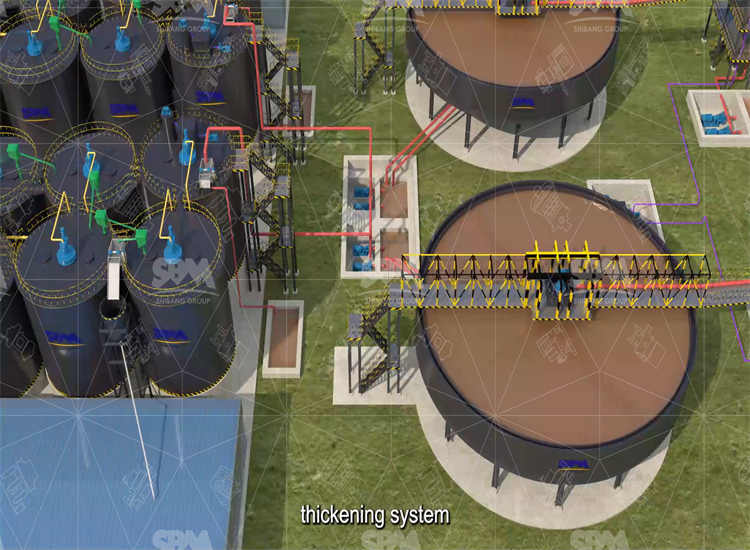
A mill delivered to site is not yet a working mill. Proper installation and commissioning are just as important as the equipment itself. Poor foundation work or incorrect alignment at startup causes vibration, accelerated bearing wear, and early gearbox failure.
SBM provides a dedicated commissioning team for every major mill installation. Our engineers remain on-site through the full startup phase — typically 2–4 weeks for a ball mill. We do not leave until the mill is running stably at design throughput and product size.
After commissioning, we offer structured support options:
We also provide complete operation and maintenance manuals in English. These are written for operators, not just engineers — clear language, step-by-step procedures, and illustrated diagrams.
What is the actual price range for copper grinding equipment in Zambia?
Equipment cost depends on mill size, motor power, drive type, and liner material. A small overflow ball mill (1.5 m × 3.0 m, ~75 kW) suitable for a 10–20 tph copper operation may start from around $50,000–$90,000 FOB. A mid-range mill (3.2 m × 4.5 m, 500–630 kW) for 60–100 tph copper ore typically falls in the $180,000–$350,000 range FOB, depending on specification.
Large SAG mills for 300+ tph operations cost considerably more — often $1.5M–$5M or above. Beyond equipment price, you need to budget for civil works, electrical, and initial spares as shown in the cost table above. To get an accurate cost for your specific operation, share your ore type, throughput target, and target grind size with SBM. We provide detailed quotations at no cost.
Which mill type suits Zambia’s copper deposits and mine conditions?
It depends on your ore characteristics and scale. Most of Zambia’s copper sulfide deposits have moderate hardness (BWi 8–15 kWh/t). For operations under 200 tph, a two-stage circuit — jaw crusher or cone crusher followed by a ball mill — is often more cost-effective than a SAG mill. SAG mills give their best advantage at large throughput (300 tph and above) where they reduce the number of crushing stages needed.
If your mine plan shows a wide range of ore hardness across different ore zones, a SAG + ball mill combination handles variability better. We recommend doing a proper ore characterization test (Bond ball mill work index, abrasion index, Bond rod mill work index) before finalizing your circuit selection. SBM can help interpret these results and recommend the right configuration.
What is the realistic timeline from equipment order to first production?
For a standard ball mill, the manufacturing lead time is typically 12–20 weeks after order confirmation, depending on mill size. Shipping to Zambia via Durban or Dar es Salaam port, then road transport to site, typically adds 6–10 weeks. Civil foundation work at the site should start in parallel with manufacturing — so the foundation is ready when the mill arrives.
On-site mechanical installation takes 2–4 weeks for a ball mill, 4–8 weeks for a SAG mill. Electrical connections and dry commissioning add another 1–2 weeks. Wet commissioning and ramp-up to design throughput typically takes 2–4 weeks. Total timeline from order to stable production: around 9–14 months for a ball mill circuit. Planning early and ordering early is the single biggest factor in hitting your project schedule.
Copper ore grinding is where ore becomes value. The right mill, correctly specified and properly supported, runs for 20+ years with manageable costs. The wrong mill drains energy and maintenance budget every shift.
SBM is a full-solution grinding equipment manufacturer. We design, build, deliver, and support grinding mills for copper operations across Africa — from small artisanal-scale circuits to large concentrator plants.
If you are planning a new copper project in Zambia, expanding an existing plant, or replacing aging grinding equipment, contact our team. Share your ore data, your throughput targets, and your site conditions. We provide a full technical recommendation and budget-level cost estimate — no obligation, no generic brochure.
Every Zambia copper project is different. We build mills to match your operation, not the other way around.
Tell us your throughput target, ore type, and grind size requirement. Our engineers will size the right mill and give you a detailed cost estimate within 3 business days.
Whatsapp:+8617329420102
Email: [email protected]
Address: No. 1688, Gaoke East Road, Pudong new district, Shanghai, China.
Online Service : Get Price
We value your feedback! Please complete the form below so that we can tailor our services to your specific needs.