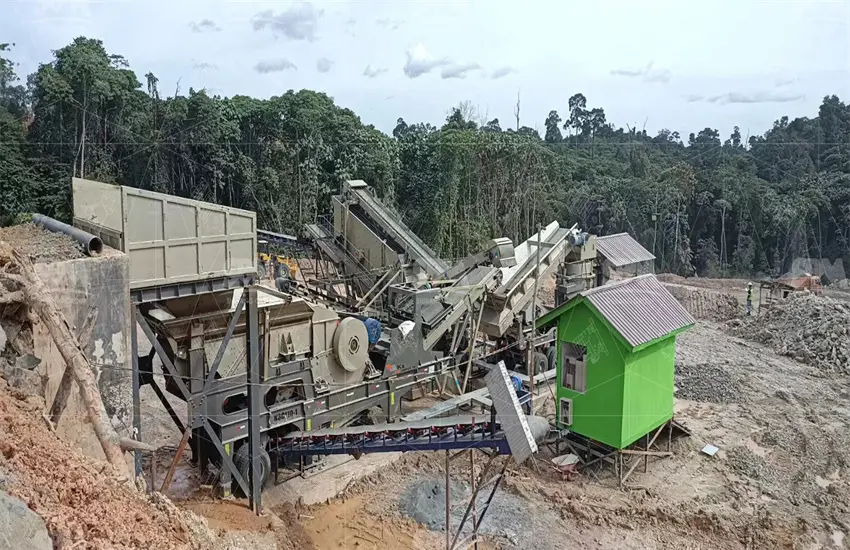
I’ve watched a lot of procurement managers frown over quotation sheets with this exact question. Four hundred tons per hour — sounds straightforward enough. But the moment you throw limestone and gypsum together on the same line, things get complicated fast. Pick the wrong equipment configuration and you’re looking at either a throughput ceiling you can’t break through, or liner sets ground down inside three months. Either way, you’ll end up losing far more than you saved on the initial purchase.
So let’s break this down properly — every cost, every moving part.
Limestone and gypsum both get labeled “soft rock,” but they behave very differently under a crusher. Limestone typically comes in with a UCS (Uniaxial Compressive Strength) of 80–120 MPa, Mohs hardness of 3–4, and a BWI (Bond Work Index) in the range of 10–14 kWh/t. Gypsum is softer — Mohs 1.5–2, BWI usually below 8 kWh/t — but it brings a different headache: high adhesiveness and a tendency to pack and block the crushing chamber if flow geometry isn’t right.
Are you running both materials on a shared line, or dedicated lines? Do you need a specific product shape? These questions drive equipment selection more than anything else. I’ve seen operations lose ¥700,000–800,000 by skipping this conversation and just ordering kit.
In China’s market, a 400 TPH limestone/gypsum crushing line typically goes one of two ways:
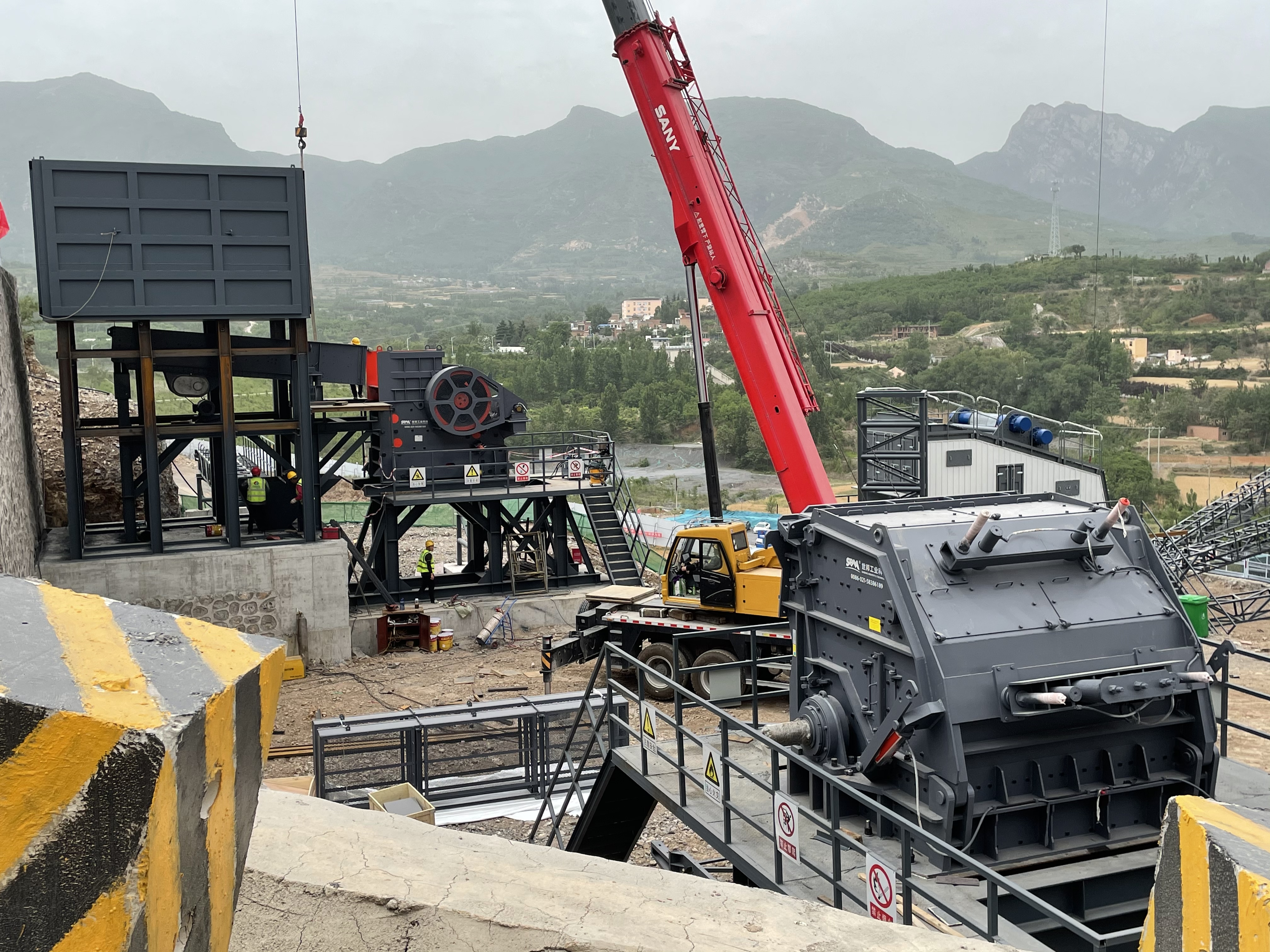
SBM has a well-proven setup for this tonnage range. Let’s walk through the configuration and what it costs.
| Crushing Stage | Recommended Model | Capacity (TPH) | Installed Power (kW) | Equipment Price Ref. (CNY 10k) |
|---|---|---|---|---|
| Primary Crushing | PE750×1060 Jaw Crusher | 130–160 | 110 | 35–45 |
| Primary (Upgraded) | C6X110 Jaw Crusher | 175–215 | 132 | 55–70 |
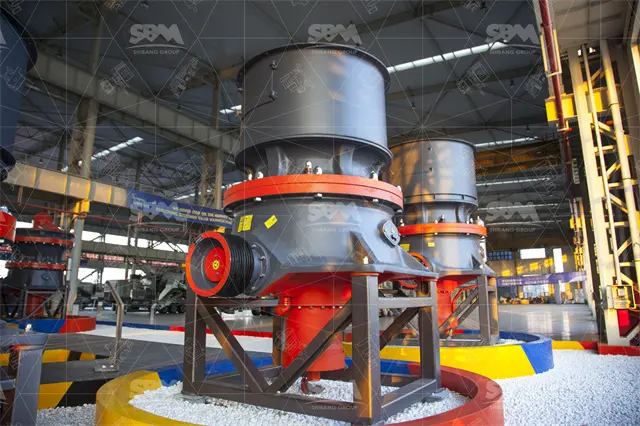
| Secondary/Tertiary | HPT300 Multi-Cylinder Hydraulic Cone Crusher | 200–260 | 300 | 110–140 |
| Sand-Making / Shaping | VSI6X1263 Vertical Shaft Impact Crusher | 150–200 | 2×160 | 80–100 |
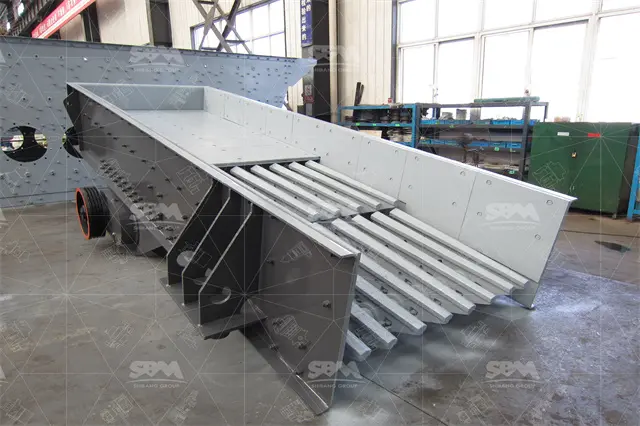
| Screening | 3YK2460 Vibrating Screen (×2 units) | — | 2×22 | 14–18 |
⚠️ Note: Prices above are ex-factory VAT-inclusive reference ranges for 2024–2025. Actual quotations vary based on steel prices, configuration grade (standard vs. premium), and installation/commissioning costs. Final pricing per SBM official contract.
Too many operators fixate on the equipment purchase price. That’s a trap. After two decades in this industry, I’ll tell you straight: the sticker price is just the tip of the iceberg. The ongoing costs are what actually define your profitability.
Liner life on your cone crusher is the single biggest lever on per-tonne operating cost. SBM’s HPT300 fitted with manganese steel liners — specifically Mn18Cr2 upper and lower liner sets — delivers 1,200–1,800 hours of service life in standard limestone duty. If your feed contains elevated silica (quartz content above 15%), upgrade to Mn22Cr2. For gypsum, liner wear is almost never the bottleneck — it’s packing and blockage that gets you.
Running 400 TPH at 8,000 hours per year, expect jaw plate consumption of roughly 2–4 sets annually, cone liner sets 4–6 per year, and VSI6X throw heads plus anvils replaced 2–3 times depending on feed. Annual wear parts budget: approximately CNY 150,000–300,000.
| Equipment | Installed Power (kW) | Load Factor | Annual Consumption (10k kWh) | Annual Power Cost (CNY 10k) |
|---|---|---|---|---|
| C6X110 Jaw Crusher | 132 | 75% | 79.2 | 51.5 |
| HPT300 Cone Crusher | 300 | 80% | 192.0 | 124.8 |
| VSI6X1263 | 320 | 70% | 179.2 | 116.5 |
| Screening + Conveyors | ~180 | 85% | 122.4 | 79.6 |
| Total | ~932 | — | 572.8 | ~CNY 3.72M |
Assuming annual output of 3.2 million tonnes (400 TPH × 8,000 hrs), power cost works out to roughly CNY 1.16/tonne. For gypsum, the lower hardness means the VSI6X can run at reduced frequency — power savings of 10–15% are realistic.
A 400 TPH line typically needs 3–4 operators and 1–2 maintenance technicians. Monthly labour cost runs CNY 40,000–60,000. Budget an additional CNY 100,000–150,000 per year for scheduled major overhaul work.
| Cost Item | Annual Cost (CNY 10k) | Per-Tonne Cost (CNY/t) |
|---|---|---|
| Equipment Depreciation (10-year straight-line) | 30–40 | 0.094–0.125 |
| Power | ~372 | ~1.16 |
| Wear Parts | 15–30 | 0.047–0.094 |
| Labour and Maintenance | 58–87 | 0.18–0.27 |
| Total | 475–529 | ~CNY 1.48–1.65 |
Bottom line: running a mature 400 TPH limestone crushing line with SBM equipment in China, your all-in processing cost lands at roughly CNY 1.50–1.70 per tonne. That sits in the competitive mid-range for the industry. Gypsum, being softer, comes in even lower — there’s room to press those numbers down further.
On the HPT multi-cylinder hydraulic cone — there’s one feature I always point out, because it’s genuinely useful in the field: the hydraulic tramp iron relief system. When an uncrushable piece enters the chamber, the discharge opening widens automatically, the foreign object passes through, and the crusher resets itself. No shutdown, no prying open the chamber, no drama. On limestone quarries where tramp metal or hard inclusions show up in feed, that’s not a marketing talking point — it’s real downtime prevention.
The VSI6X series is worth calling out separately. Its rock-on-rock crushing chamber design keeps wear-part consumption extremely low on medium-soft materials like limestone and gypsum, and the product shape is consistently good. That’s why it’s been adopted so widely in cement aggregate operations and gypsum powder pre-processing plants — it simply performs where other sand-making units struggle.
Whatsapp:+8617329420102
Email: [email protected]
Address: No. 1688, Gaoke East Road, Pudong new district, Shanghai, China.
Online Service : Get Price
We value your feedback! Please complete the form below so that we can tailor our services to your specific needs.